

The best industries and services news from Singapore
Provided by AGP
Focus Group Discussions: Methods, Recruitment, Costs, and Best Practices | IMARC Group
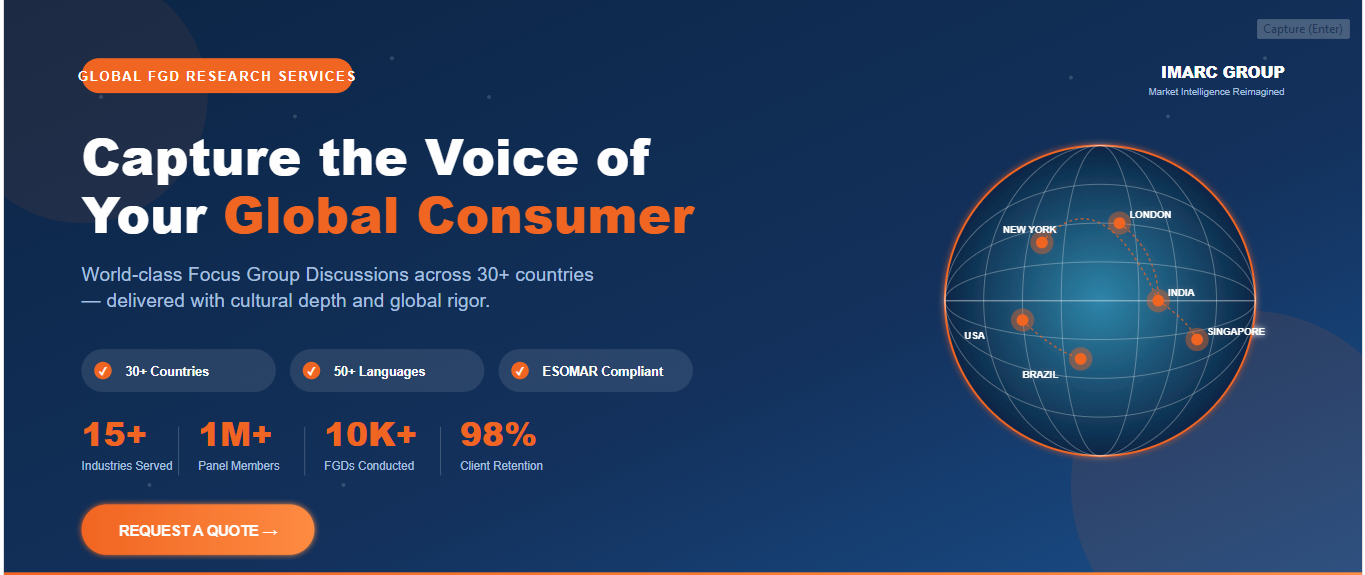
Focus Group Discussions (FGDs), powerful qualitative research tools to capture this voice, and India has emerged as a global hub high-impact, cost-efficient.
INDIA, May 15, 2026 /EINPresswire.com/ -- In an era where consumer behaviour shifts faster than ever, brands and investors need more than numbers — they need the voice of the consumer. Focus Group Discussions (FGDs) remain one of the most powerful qualitative research tools to capture this voice, and India has emerged as a global hub for high-impact, cost-efficient FGD research.𝐖𝐡𝐚𝐭 𝐢𝐬 𝐚 𝐅𝐨𝐜𝐮𝐬 𝐆𝐫𝐨𝐮𝐩 𝐃𝐢𝐬𝐜𝐮𝐬𝐬𝐢𝐨𝐧 (𝐅𝐆𝐃)?
A Focus Group Discussion is a structured qualitative research method where a small group of carefully selected participants — typically 6 to 10 — engage in a moderated conversation around a specific product, service, concept, or issue. Unlike surveys that capture what consumers think, FGDs reveal why they think it, surfacing emotions, motivations, language, and unspoken drivers behind decisions.
𝐓𝐡𝐞 𝐑𝐨𝐥𝐞 𝐨𝐟 𝐅𝐆𝐃𝐬 𝐢𝐧 𝐐𝐮𝐚𝐥𝐢𝐭𝐚𝐭𝐢𝐯𝐞 𝐌𝐚𝐫𝐤𝐞𝐭 𝐑𝐞𝐬𝐞𝐚𝐫𝐜𝐡 𝐆𝐥𝐨𝐛𝐚𝐥𝐥𝐲
Across the world, FGDs power some of the most consequential business decisions:
• Product innovation and concept testing before launch
• Brand positioning, messaging, and creative evaluation
• Customer experience and journey mapping
• Policy, public health, and social impact studies
• Market entry strategy and segmentation validation
For multinational corporations, FGDs serve as the human lens that complements quantitative data — reducing risk in high-stakes decisions.
𝐖𝐡𝐲 𝐈𝐧𝐝𝐢𝐚 𝐇𝐚𝐬 𝐁𝐞𝐜𝐨𝐦𝐞 𝐚 𝐒𝐭𝐫𝐚𝐭𝐞𝐠𝐢𝐜 𝐃𝐞𝐬𝐭𝐢𝐧𝐚𝐭𝐢𝐨𝐧 𝐟𝐨𝐫 𝐅𝐆𝐃-𝐁𝐚𝐬𝐞𝐝 𝐑𝐞𝐬𝐞𝐚𝐫𝐜𝐡
𝐈𝐧𝐝𝐢𝐚 𝐨𝐟𝐟𝐞𝐫𝐬 𝐚 𝐫𝐚𝐫𝐞 𝐜𝐨𝐦𝐛𝐢𝐧𝐚𝐭𝐢𝐨𝐧 𝐨𝐟 𝐬𝐜𝐚𝐥𝐞, 𝐝𝐢𝐯𝐞𝐫𝐬𝐢𝐭𝐲, 𝐚𝐧𝐝 𝐜𝐨𝐬𝐭-𝐞𝐟𝐟𝐢𝐜𝐢𝐞𝐧𝐜𝐲:
• 1.4 billion+ consumers spanning rural and urban markets
• 22+ official languages and rich cultural variation
• 60–70% lower cost compared to FGDs in the US, UK, or EU
• A deep pool of trained, ESOMAR-aligned moderators
• Tier 1, 2, and 3 city access for layered consumer research
𝐖𝐡𝐲 𝐅𝐨𝐜𝐮𝐬 𝐆𝐫𝐨𝐮𝐩 𝐃𝐢𝐬𝐜𝐮𝐬𝐬𝐢𝐨𝐧𝐬 𝐌𝐚𝐭𝐭𝐞𝐫
• Reveal the "why" behind purchase and brand decisions
• Validate hypotheses before significant investment
• De-risk product launches through early concept testing
• Capture non-verbal cues — body language, tone, hesitation
• Bridge cultural gaps for international brands entering new markets
𝐊𝐞𝐲 𝐀𝐬𝐩𝐞𝐜𝐭𝐬 𝐨𝐟 𝐅𝐨𝐜𝐮𝐬 𝐆𝐫𝐨𝐮𝐩𝐬 𝐢𝐧 𝐑𝐞𝐬𝐞𝐚𝐫𝐜𝐡
• Structure: Moderated, semi-structured discussion guides
• Group size: Standard 8–10; mini-groups 4–6; dyads/triads 2–3
• Duration: 60–120 minutes per session
• Data type: Qualitative, exploratory, perceptual
• Output: Insight reports, transcripts, recordings, thematic maps
𝐓𝐲𝐩𝐞𝐬 𝐨𝐟 𝐅𝐨𝐜𝐮𝐬 𝐆𝐫𝐨𝐮𝐩 𝐃𝐢𝐬𝐜𝐮𝐬𝐬𝐢𝐨𝐧𝐬
𝐁𝐲 𝐌𝐨𝐝𝐞
• In-Person FGDs — best for emotional depth and non-verbal capture
• Online / Virtual FGDs — fast, geographically flexible
• Hybrid FGDs — combine in-person depth with virtual scale
𝐁𝐲 𝐆𝐫𝐨𝐮𝐩 𝐒𝐢𝐳𝐞
• Standard groups, mini-groups, dyads, and triads
𝐁𝐲 𝐀𝐮𝐝𝐢𝐞𝐧𝐜𝐞
• Consumer (B2C), B2B & Expert Panels, Healthcare & KOL Panels
𝐁𝐲 𝐂𝐨𝐦𝐩𝐨𝐬𝐢𝐭𝐢𝐨𝐧
• Homogeneous (uniform profile)
• Heterogeneous (diverse perspectives)
• Vernacular / regional language groups
𝐁𝐞𝐧𝐞𝐟𝐢𝐭𝐬 𝐨𝐟 𝐂𝐨𝐧𝐝𝐮𝐜𝐭𝐢𝐧𝐠 𝐅𝐨𝐜𝐮𝐬 𝐆𝐫𝐨𝐮𝐩𝐬
• Rich, contextual qualitative insight
• Faster turnaround than ethnography
• Hypothesis validation and idea refinement
• Cost-effective testing of multiple concepts in one session
• Cross-cultural and cross-segment learning
• Real-time observation for stakeholders via streaming
𝐌𝐞𝐭𝐡𝐨𝐝𝐨𝐥𝐨𝐠𝐲
A robust FGD engagement follows a disciplined, multi-phase methodology — combining research design, fieldwork, analysis, and synthesis. The strength of an FGD lies not in the conversation alone, but in the rigor of planning before and the analysis after.
𝐏𝐫𝐨𝐜𝐞𝐬𝐬 𝐨𝐟 𝐅𝐨𝐜𝐮𝐬 𝐆𝐫𝐨𝐮𝐩 𝐃𝐢𝐬𝐜𝐮𝐬𝐬𝐢𝐨𝐧 — 𝐒𝐭𝐞𝐩-𝐛𝐲-𝐒𝐭𝐞𝐩
1. 𝐃𝐞𝐟𝐢𝐧𝐞 𝐑𝐞𝐬𝐞𝐚𝐫𝐜𝐡 𝐎𝐛𝐣𝐞𝐜𝐭𝐢𝐯𝐞𝐬 - Set clear goals and hypotheses
2. 𝐃𝐞𝐬𝐢𝐠𝐧 𝐒𝐜𝐫𝐞𝐞𝐧𝐞𝐫 & 𝐃𝐢𝐬𝐜𝐮𝐬𝐬𝐢𝐨𝐧 𝐆𝐮𝐢𝐝𝐞 - Tailor questions to target audience
3. 𝐑𝐞𝐜𝐫𝐮𝐢𝐭 𝐏𝐚𝐫𝐭𝐢𝐜𝐢𝐩𝐚𝐧𝐭𝐬 - Multi-channel sourcing with strict quality control
4. 𝐁𝐫𝐢𝐞𝐟 𝐭𝐡𝐞 𝐌𝐨𝐝𝐞𝐫𝐚𝐭𝐨𝐫 - Cultural, linguistic, and topic alignment
5. 𝐂𝐨𝐧𝐝𝐮𝐜𝐭 𝐭𝐡𝐞 𝐒𝐞𝐬𝐬𝐢𝐨𝐧 - Probing, projective techniques, real-time observation
6. 𝐑𝐞𝐜𝐨𝐫𝐝, 𝐓𝐫𝐚𝐧𝐬𝐜𝐫𝐢𝐛𝐞 & 𝐓𝐫𝐚𝐧𝐬𝐥𝐚𝐭𝐞 - Audio/video capture with multi-language conversion
7. 𝐀𝐧𝐚𝐥𝐲𝐳𝐞 𝐃𝐚𝐭𝐚 - Thematic, content, and narrative analysis
8. 𝐑𝐞𝐩𝐨𝐫𝐭 𝐈𝐧𝐬𝐢𝐠𝐡𝐭𝐬 - Strategic recommendations and synthesis workshop
𝐈𝐧𝐝𝐮𝐬𝐭𝐫𝐲 𝐀𝐩𝐩𝐥𝐢𝐜𝐚𝐭𝐢𝐨𝐧𝐬
𝐅𝐆𝐃𝐬 𝐝𝐞𝐥𝐢𝐯𝐞𝐫 𝐯𝐚𝐥𝐮𝐞 𝐚𝐜𝐫𝐨𝐬𝐬:
• FMCG, Retail, Food & Beverages — concept and packaging testing
• Healthcare & Pharmaceuticals — KOL, patient, and HCP insights
• BFSI — product design, digital banking experience
• Automotive — features, aesthetics, brand perception
• Technology & Media — UX, content consumption, platform research
• Agriculture — farmer behavior, rural consumption
• Energy & Mining, Construction, Packaging, Electronics, Transport & Logistics — B2B decision-maker insights
𝐂𝐨𝐫𝐞 𝐂𝐨𝐦𝐩𝐨𝐧𝐞𝐧𝐭𝐬 𝐨𝐟 𝐅𝐨𝐜𝐮𝐬 𝐆𝐫𝐨𝐮𝐩 𝐒𝐞𝐫𝐯𝐢𝐜𝐞𝐬
• Participant recruitment via proprietary panels and field agencies
• Multilingual moderation across global and Indian languages
• In-person viewing facilities in major Indian and international cities
• Online platforms with live streaming and remote viewing
• Translation, transcription, and AI-powered analytics
• Custom reporting with executive synthesis and verbatim libraries
𝐆𝐚𝐢𝐧 𝐑𝐢𝐜𝐡 𝐐𝐮𝐚𝐥𝐢𝐭𝐚𝐭𝐢𝐯𝐞 𝐈𝐧𝐬𝐢𝐠𝐡𝐭𝐬 𝐢𝐧𝐭𝐨 𝐆𝐫𝐨𝐮𝐩 𝐃𝐲𝐧𝐚𝐦𝐢𝐜𝐬: https://www.imarcgroup.com/services/focus-groups
𝐏𝐚𝐫𝐭𝐢𝐜𝐢𝐩𝐚𝐧𝐭 𝐑𝐞𝐜𝐫𝐮𝐢𝐭𝐦𝐞𝐧𝐭 𝐢𝐧 𝐈𝐧𝐝𝐢𝐚
Effective recruitment is the foundation of credible FGD output.
𝐑𝐞𝐜𝐫𝐮𝐢𝐭𝐦𝐞𝐧𝐭 𝐂𝐡𝐚𝐧𝐧𝐞𝐥𝐬
• Proprietary online research panels
• Field agencies and on-ground networks
• Social media and WhatsApp groups
• Community and NGO referrals
𝐒𝐜𝐫𝐞𝐞𝐧𝐢𝐧𝐠 𝐂𝐫𝐢𝐭𝐞𝐫𝐢𝐚
• Demographics (age, gender, SEC)
• Geography (Tier 1/2/3, rural)
• Category usage, attitudes, behavior
• DPDP-compliant consent and disclosure
𝐐𝐮𝐚𝐥𝐢𝐭𝐲 𝐂𝐨𝐧𝐭𝐫𝐨𝐥𝐬
• Duplicate-respondent checks
• Anti-cheater verification
• Over-recruitment (12+ to secure 8–10 show-ups)
• 7–10 day standard recruitment; 15–21 days for niche audiences
𝐓𝐲𝐩𝐞𝐬 𝐨𝐟 𝐅𝐨𝐜𝐮𝐬 𝐆𝐫𝐨𝐮𝐩 𝐃𝐢𝐬𝐜𝐮𝐬𝐬𝐢𝐨𝐧𝐬 𝐔𝐬𝐞𝐝 𝐢𝐧 𝐈𝐧𝐝𝐢𝐚
𝐈𝐧𝐝𝐢𝐚'𝐬 𝐝𝐞𝐩𝐭𝐡 𝐚𝐥𝐥𝐨𝐰𝐬 𝐟𝐨𝐫 𝐬𝐩𝐞𝐜𝐢𝐚𝐥𝐢𝐳𝐞𝐝 𝐅𝐆𝐃 𝐟𝐨𝐫𝐦𝐚𝐭𝐬:
• Vernacular Groups — in Hindi, Tamil, Telugu, Bengali, Marathi, Kannada, and more
• Rural Tier 3 Groups — hyper-localized recruitment and moderation
• HNI & C-suite Panels — premium recruitment with executive moderators
• Physician & KOL Panels — clinical-specialty alignment
• WhatsApp Asynchronous Groups — mobile-first qualitative research
• Online Bulletin Boards — multi-day digital discussions
𝐂𝐨𝐬𝐭 𝐂𝐨𝐦𝐩𝐨𝐧𝐞𝐧𝐭𝐬
• Recruitment and screening
• Participant incentives (varies by SEC and profession)
• Moderator fees and facility/platform charges
• Translation, transcription, and reporting
• Travel and logistics for multi-city studies
𝐈𝐧𝐝𝐢𝐚'𝐬 𝐂𝐨𝐬𝐭 𝐀𝐝𝐯𝐚𝐧𝐭𝐚𝐠𝐞
• ~60–70% lower than the US and UK
• ~40–50% lower than Singapore or Japan
• Comparable quality to global standards
𝐂𝐨𝐦𝐩𝐥𝐢𝐚𝐧𝐜𝐞, 𝐄𝐭𝐡𝐢𝐜𝐬 & 𝐃𝐚𝐭𝐚 𝐏𝐫𝐢𝐯𝐚𝐜𝐲
Trust is non-negotiable. IMARC adheres to:
• DPDP Act, 2023 (India)
• GDPR (Europe) and CCPA (US)
• ESOMAR Code of Conduct
• ISO 20252 Market Research Standard
• Informed consent and the right to withdraw
• Cross-border data transfer protocols
𝐒𝐨𝐥𝐮𝐭𝐢𝐨𝐧𝐬 𝐟𝐨𝐫 𝐁𝐮𝐬𝐢𝐧𝐞𝐬𝐬𝐞𝐬 𝐨𝐟 𝐄𝐯𝐞𝐫𝐲 𝐒𝐢𝐳𝐞
𝐓𝐢𝐞𝐫 𝟏: 𝐒𝐭𝐚𝐫𝐭𝐮𝐩𝐬 & 𝐒𝐦𝐚𝐥𝐥 𝐁𝐮𝐬𝐢𝐧𝐞𝐬𝐬𝐞𝐬
• Cost-efficient single-city FGDs
• Concept testing and MVP validation
• Lean reporting and rapid turnaround
𝐓𝐢𝐞𝐫 𝟐: 𝐒𝐌𝐄𝐬
• Multi-city studies and segment validation
• Brand-building and messaging refinement
• Online and hybrid formats for budget flexibility
𝐓𝐢𝐞𝐫 𝟑: 𝐋𝐚𝐫𝐠𝐞 𝐄𝐧𝐭𝐞𝐫𝐩𝐫𝐢𝐬𝐞𝐬
• Pan-India and multi-country FGDs
• Custom expert panels and ongoing insight programs
• Strategic synthesis workshops for leadership
𝐓𝐢𝐞𝐫 𝟒: 𝐆𝐥𝐨𝐛𝐚𝐥 𝐈𝐧𝐯𝐞𝐬𝐭𝐨𝐫𝐬 & 𝐌𝐮𝐥𝐭𝐢𝐧𝐚𝐭𝐢𝐨𝐧𝐚𝐥𝐬
• India market-entry research
• Cross-cultural and multi-country comparative studies
• Compliance-led, white-glove project management
𝐄𝐦𝐞𝐫𝐠𝐢𝐧𝐠 𝐓𝐫𝐞𝐧𝐝𝐬 𝐢𝐧 𝐅𝐨𝐜𝐮𝐬 𝐆𝐫𝐨𝐮𝐩 𝐑𝐞𝐬𝐞𝐚𝐫𝐜𝐡
• AI-powered transcription, translation, and sentiment analysis
• WhatsApp and mobile-first qualitative research
• Asynchronous online communities running over days or weeks
• Vernacular and regional language expansion
• Neuro-qualitative integration — biometric and emotional data
• Real-time client streaming dashboards for global stakeholders
𝐖𝐡𝐲 𝐈𝐧𝐝𝐢𝐚 𝐑𝐞𝐦𝐚𝐢𝐧𝐬 𝐚 𝐒𝐭𝐫𝐚𝐭𝐞𝐠𝐢𝐜 𝐌𝐚𝐫𝐤𝐞𝐭 𝐟𝐨𝐫 𝐅𝐆𝐃-𝐁𝐚𝐬𝐞𝐝 𝐑𝐞𝐬𝐞𝐚𝐫𝐜𝐡
India is no longer just a cost destination — it is an insight destination. The combination of consumer scale, cultural diversity, language richness, and a mature research ecosystem makes India indispensable for any brand, investor, or policymaker seeking authentic consumer truth.
𝐅𝐮𝐭𝐮𝐫𝐞 𝐎𝐮𝐭𝐥𝐨𝐨𝐤 𝐟𝐨𝐫 𝐐𝐮𝐚𝐥𝐢𝐭𝐚𝐭𝐢𝐯𝐞 𝐑𝐞𝐬𝐞𝐚𝐫𝐜𝐡 𝐢𝐧 𝐈𝐧𝐝𝐢𝐚
The Indian qualitative research market is projected to expand strongly through 2030, driven by:
• Rising digital adoption in Tier 2/3 cities
• Expansion of vernacular consumer brands
• Foreign direct investment in consumer-facing sectors
• AI-enabled efficiency in qualitative analysis
• Hybrid research models combining in-person and remote
𝐖𝐡𝐲 𝐂𝐡𝐨𝐨𝐬𝐞 𝐈𝐌𝐀𝐑𝐂 𝐆𝐫𝐨𝐮𝐩 𝐟𝐨𝐫 𝐅𝐆𝐃 𝐑𝐞𝐬𝐞𝐚𝐫𝐜𝐡
Global delivery standards, India-competitive costs, and qualitative insight that drives confident decisions for investors, brands, and policymakers worldwide.
• Pan-India recruitment network with proprietary panel access
• Global delivery footprint with offices in the US, UK, and India
• Multilingual moderators across 22+ languages
• ESOMAR and ISO 20252-aligned methodologies
• End-to-end execution from recruitment to synthesis
• Industry depth across 15+ sectors
• Global standards at India-competitive cost
𝗖𝗼𝗻𝘁𝗮𝗰𝘁 𝗨𝘀: https://www.imarcgroup.com/contact-us
𝗜𝗠𝗔𝗥𝗖 𝗚𝗿𝗼𝘂𝗽
134 N 4th St., Brooklyn, NY 11249, USA
𝗘𝗺𝗮𝗶𝗹: sales@imarcgroup.com
𝗧𝗲𝗹. 𝗡𝗼.: (D) +91 120 433 0800
𝗨𝗻𝗶𝘁𝗲𝗱 𝗦𝘁𝗮𝘁𝗲𝘀: +1-201-971-6302
𝐅𝐫𝐞𝐪𝐮𝐞𝐧𝐭𝐥𝐲 𝐀𝐬𝐤𝐞𝐝 𝐐𝐮𝐞𝐬𝐭𝐢𝐨𝐧𝐬 (𝐅𝐀𝐐𝐬)
How is a focus group conducted?
What are the benefits of using focus groups in research?
How do I participate in a focus group?
How and when are incentive payments distributed?
How is qualitative data analyzed?.
What is the typical cost of an FGD in India?
How long does recruitment take?
Are online FGDs as effective as in-person?
How is participant data protected under the DPDP Act?
How can I contact the IMARC Group support team?
Elena Anderson
IMARC Services Private Limited
+ +1 201-971-6302
email us here
Legal Disclaimer:
EIN Presswire provides this news content "as is" without warranty of any kind. We do not accept any responsibility or liability for the accuracy, content, images, videos, licenses, completeness, legality, or reliability of the information contained in this article. If you have any complaints or copyright issues related to this article, kindly contact the author above.
